
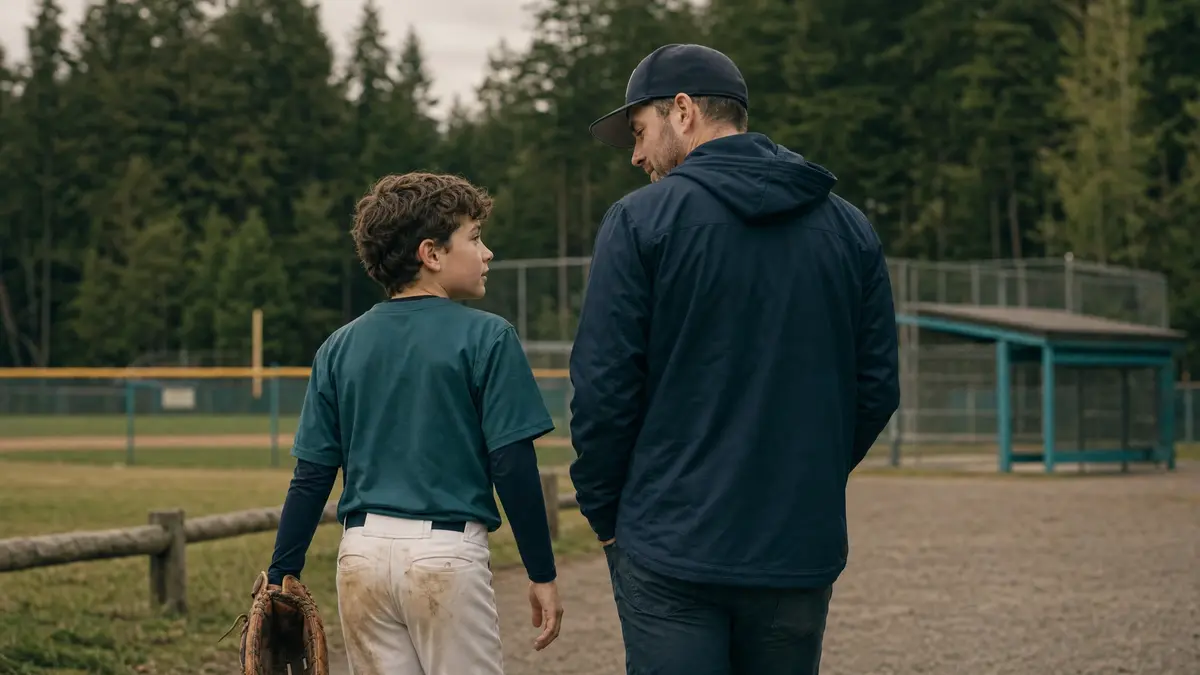
Your kid just struck out. Maybe it ended the inning. Maybe it ended the game. They’re walking back to the dugout with their head down, and later they’ll climb into your car, and you’ll have a decision to make about what to say.
Most of us get this wrong, and we get it wrong out of love. We want to fix it. We want to explain what happened. We want them to feel better right now. So we say things that, it turns out, make the next at-bat harder.
What doesn’t help
“You’ve got to keep your hands back.” Technical coaching in the moment of failure. Your kid heard the coach say it already. Hearing it again from you, right now, tells them the strikeout was a bigger deal than it was, and that you were watching for mistakes.
“Don’t worry about it, you’ll get them next time.” Sounds kind. But it skips right over how they feel and tells them the feeling is a problem to get past. Kids notice when we rush them out of a feeling.
“Why did you swing at that?” A question that isn’t really a question. They know why. They were trying to hit the ball.
And silence, the tense kind, where your kid can feel that you’re disappointed and choosing not to say so. That one might be the hardest of all.
What actually helps
Start with the feeling, not the fix. “That one stung, huh.” Five words. It says: I saw it, it’s okay that it hurt, and I’m not going to analyze you. Most kids relax visibly when the first thing they hear isn’t a correction.
Then, if anything, ask about the next one, not the last one. “What are you thinking for your next at-bat?” or “How’d you reset after that?” This points them forward. In our program we call it the next pitch mindset, and it’s one of the most important skills a young athlete can build: the last play is gone, and the only thing that matters is the one in front of you.
And when the time is right, usually later, not in the car, remind them where confidence actually comes from. Not from the result of one at-bat. From the work they’ve put in. A strikeout doesn’t erase two weeks of tee work. That’s still true.
What you’re really teaching
Here’s the part most parents don’t see. Your kid has a voice in their head, and after a strikeout it’s already saying “you always choke” or “everyone saw that.” What you say next either agrees with that voice or quietly argues with it. “That one stung” argues with it. “Why did you swing at that” agrees with it.
You’re not just comforting your kid after one at-bat. You’re teaching them how to talk to themselves after every failure for the rest of their life. That’s worth getting right.
The short version
• Name the feeling before anything else.
• Skip the technical coaching. That’s for practice.
• Point them to the next pitch, not the last one.
• Save the confidence talk for later, and build it on their work, not the result.
This is exactly what our Mental Performance courses teach athletes to do for themselves: catch the harsh voice, reset, and get to the next pitch. If you’d like your kid to have those tools in their own hands, the courses are free to read at any level.

Leave a Reply